Let the Moonlight Give You Wings Progress Report #2

The following information and screenshots come from a work in progress. Anything in them is subject to change.

Some of the assets used were created by others. While they may not appear in the final game, said assets will be listed with their creators at the bottom of this post.

Quick recap: Let the Moonlight Give You Wings is an RPG Maker game and accompanying novel I’ve been working on. The initial announcement can be found here, and the first progress report can be found here. Progress can be viewed and followed here on my blog from now on, under the “Works in Progress” section in the header bar.

It’s been a few months since I touched on this progress, so I have a more substantial post than last time.

The Game

I’ve been putting together maps and characters while still trying to hammer out the overall style. I’m using a few non-default tilesets, and making changes to the default ones I’ll be using. I’m still not sure what all I’ll settle on, but at the moment I’m customizing the graphics to make the game look less and less vanilla.

The main quest line is almost complete. I have a handful of cinemas left and a smaller handful of locations in which they take place, and once those are finished, I can set to work packing in side quests and tweaking existing places to make the world come to life. The main cast is pretty much finished; I had to completely re-design one of the major characters because she looked too much like another character I saw elsewhere, but I’m super happy with the result. It ended up yielding an entire plot line, side quest, and history for this fictional world. I’m also making more faces for each character; I’ll be using the default face creator, but tweaking it to include facial expressions not possible in the RPG Maker face creator.

All in all, everything is going smoothly. My last major hurdle game-wise is that I haven’t figured out one of the later dungeons; I want to do something special with it, but I haven’t decided what.

Another big thing I’ve been working on are the game’s music and sound effects. I have a few cool things in place and a lot of rough sketches, but it’s coming together. I’m thinking about making the game’s soundtrack available for download, depending on how complex it gets, and as time goes on I’ll probably share a track or two here on my blog.

The Book

This brings me to the main point of a second progress report: Wednesday, April 1st, is the first day of Camp NaNoWriMo 2015, and I’ll be using this session to get started on the novel. I’m stoked to get to work on it, and I think writing the book and making the game concurrently will help me write both of them better, maybe help me work out some of the finer details of the story and world involved. You can follow my progress on the book here: http://campnanowrimo.org/campers/crackedthesky

Timeframe

It’s still not possible for me to even guess when this will be finished, but I’d like to think the game and book will release around the same time, and I’d love for both to be out by this winter. That said, I just can’t say for sure about either.

In the meantime, here are a few screenshots of some of the more complete graphics, ideas, or places, along with a description of them. Something I definitely don’t want to do is make promises that are mysteriously missing in the final product, so know that if I show something here, it’s something I’m almost positive will be in the final game, and if it isn’t, I’ll probably post about it the moment I have to cut it from the game. So expect minor changes, but if I say a feature is going to be in, it’s most likely going to be in.

Also, I apologize for the image compression. It’s not terrible, but the screenshots are slightly blurrier than the actual game will be.

Moonlight Test Bedroom

This picture is from a scene early on. The player character, Emery, can change outfits at a dresser in her room. In this scenario, she has to put on her school uniform, and can’t leave for school until she does. In both worlds (our world and fantasy), she’ll be able to change clothes and the character graphic will reflect this. I haven’t decided yet whether her party members’ graphics will also change depending on what they’re wearing; it’s time-consuming to make different graphics for each outfit, and even more so considering another feature I’d really like to implement into the game (which I’ll probably show next time).

As a bonus, you can see my custom text background in this picture, as well as the screen tint to reflect what time it is (I should note that while this scene is supposed to be in the morning, the screen is actually tinted to be evening because I was in debug mode at the time I took the screenshot).
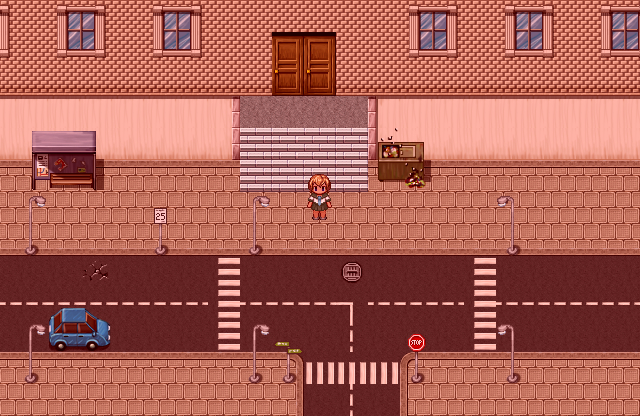
Moonlight Alpha City

Here’s a shot of the city Emery lives in. I need to animate the flies on the dumpster, and the double-door needs a custom door graphic, but otherwise, this is more or less complete. Also note Emery’s school uniform.

Moonlight Alpha School

The lobby of Emery’s school. I’ll populate it with NPCs later. Also, it won’t be so orange in the final game; the lighting is currently set to sunset.

The next two pictures will highlight a major difference from the first time I showed images from my game. Last September I posted an image from an example battle, seen here:

Let the Moonlight Give You Wings

As you’ll see in the next screenshot, I’ve added a different battle engine:
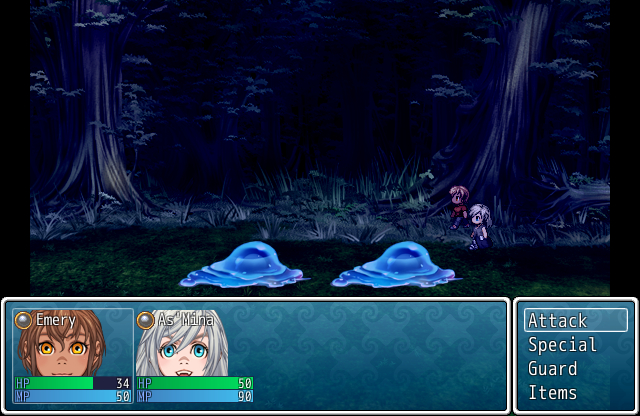
Moonlight Alpha Battle

The characters now appear to the side of the screen, and characters and enemies move when they attack, like in classic RPGs, thanks to Yanfly’s visual battler system. I still have to tweak it so characters aren’t floating like they are here and enemies aren’t oversized, but it’s more imaginative than the default battle engine.

Moonlight Alpha Lake

Here’s a lake and some cliffs. I’m hoping to include a lot of nooks and crannies to explore, and a fishing system is currently way on the backburner and might not be included at all, but these are the kinds of things I’d like players to be able to do in Let the Moonlight Give You Wings.

You’ll notice a few more characters in this screenshot. These are more or less final designs; there are currently 9 characters players can add to their party. I might introduce a few of them later, but on the whole I’d like them to remain a mystery, part of the story that unfolds as players play the game. I haven’t decided how many can battle at a time yet.

Moonlight Alpha Port Town

Here’s an early version of a port town with docks. Driftwood and other wood can be chopped for firewood, and will eventually re-appear. Note the clock in the lower-right corner; this can be toggled on and off.

Moonlight Alpha Snow

Here’s a snowy environment. It’s currently snowing (hard to tell, but there’s a snowflake over the black cave entry in the upper-left). Weather is something I’m trying to make dynamic; it won’t always snow in snowy areas, it’ll sometimes rain in other places, or be windy. I’m hoping to have some cool weather-based features in the final game.

So that’s it for this progress report. My main focus will probably be on the book for most of April, and hopefully I can get a rough draft down, then go back and work on the game for a while before I get to editing the novel.

Next progress report I’ll hopefully be able to show off some of the cooler features I’m putting together, possibly some music, possibly a video, maybe something even cooler than that.

This game wouldn’t be very good without the use of several assets made by other people. Here are the ones seen in these screenshots:

SES Dynamic Time and Clock by Solistra
Ace Battle Engine and Animated Battlers by Yanfly
Shigekichi’s Resource Pack by Shigekichi
Modern Day Tileset by Enterbrain / Lunarea
Sprite base by Mack

If I missed any, I sincerely apologize, will edit this post if I’m made aware of any mistakes, and the final game should include all appropriate credits.

nowReading: The Dispossessed

The Dispossessed
The Dispossessed by Ursula K. Le Guin
My rating: 4 of 5 stars

It’s hard to assign a star rating to this one. On one hand, “it was amazing” is an understatement. On the other, “I liked it” is accurate.

The Dispossessed features sprawling moments of brilliance, pure genius word after word, big ideas delivered one after another. The book doesn’t preach; the characters and even some of the ideas are wrong or don’t pan out at times, it’s as critical of itself as everything it else it criticizes, which is quite a lot. It’s easy to say some of my favorite quotes going forward will have been discovered here. My mind was blown again and again.

It’s not a philosophy book but a work of fiction, and Le Guin has, as always, done a good job keeping the story in front of its moral. As far as her Hain books go, however, this one isn’t all that physically exciting. The page-turning comes from a yearning to take in all of the ideas happening, while the actions of the characters are sometimes downright boring. There are (in my copy at least) an unfortunate amount of typos, and certain areas where the writing itself feels like a rough draft. Some things read more as a summary of events than actual events, there are a lot of lists given, and the chapters are too long for their own good. The decision to split each chapter between past and present is smart, but the chapters are so long it can be difficult to remember where the last time frame left off. Shorter chapters would’ve been easily accomplished without breaking the pattern. Too often things are explained as soon as or even right after they’re relevant to a conversation or action; Chekhov’s gun kept firing before it was hung on the wall or, sometimes, even assembled. More things are placed exactly as they should be than not, but the ones that weren’t are noticeable.

It’s a long read, and sometimes a hard one. There’s a lot to take in. Lots of philosophy, lots of symbolism (the last line blew me away). Less physical action yet more lore than any other Ekumen book, it’s possibly the most important in the series, as well as being an important work of American literature.

It’s amazing. I love the book, even if I only like the story.

View all my reviews

These Shoes

These Shoes

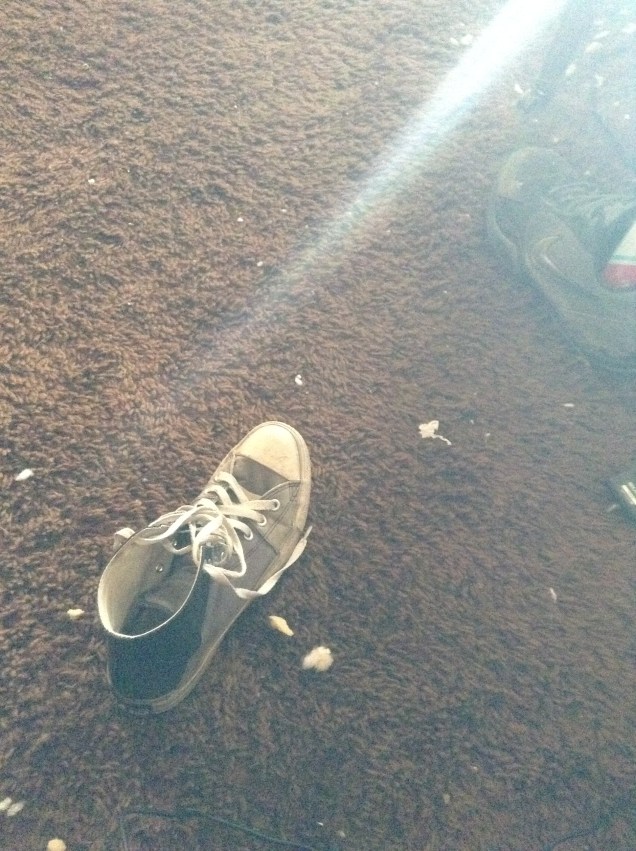
See these shoes?

When I got these shoes, I had just graduated high school. I was starting to hang out with some new friends, I was going to college, I was working my first real job.

I was wearing these shoes when I had my first panic attack. I wore them through countless others. I walked to and from school and work and the bus stop in these shoes. I sat through my classes and worked through my shifts and rode the bus along the highway.

When I missed the bus, I walked that highway. I walked the streets of several cities, I walked the woods with my friends. Up and down steps formed by roots in mud, sitting on gigantic stones amid maple trees in a woods surrounded on all sides by a city that, to us, in that circle, might as well have not been there.

I wore these shoes when I lost old friends. I wore them when I made new ones. I wore them when I graduated college, got a different job, worked through that one and realized writing was my job all along.

These shoes accompanied me through millions of words, through the moments that inspired them, the people that became characters, the characters I wished were real people.

Shoes in a Car

These shoes have walked the earth of several states. They’ve been on camping trips, to concerts, in parks and on gravel roads, touched the pedals of several cars, carried me over broken glass and cracked cement. They’ve walked the neighborhood beside a dog once so small I had to carry her the rest of the way home. The laces have been frayed by kittens playing with them, and those kittens are as big as lions, now.

I wore these shoes that year I lost forty pounds. Along the treadmill, trying to stay in shape, just trying to sort out plot lines or real life problems in my head. They’ve seen rainstorms, tornadoes, car wrecks, changes. Slides, park swings, that merry-go-round that made us sick, the track around that park where some people we barely knew abandoned us, that thunderstorm outside the house where they abandoned us again. They were here when I published my first book, they were here when I published my latest. And they were here when I wrote them both.

All the movie theaters, the stores, the midnight releases, the parties, the quiet nights on the back porch swing; I wore them when I helped my best friend move into his first place. Up and down three flights of stairs, carrying furniture, wearing these shoes. Around town in the snow that time the gate fell over and the dogs got out, looking for them everywhere, wearing these shoes. Rushing pets to the vet, and later burying them, wearing these shoes. Planting flowers in these shoes, re-arranging my room just to feel something new, decorating for birthday parties or cleaning the house for Thanksgiving.

When I got these shoes, I couldn’t imagine the feeling of finishing a novel. I couldn’t imagine the feeling of arm pain so bad I thought I’d never finish another. Didn’t think I’d shuffle favorite bands so many times; back then I had never even heard of La Dispute. Thought my furniture would always stay the same, thought I’d always walk around the woods with the same people, I wasn’t aware how fragile everything around me was. You never see the cracks, only the broken glass you can’t help stepping on later. And after the collapse, you can’t see yourself fitting the pieces back together. And usually you don’t. But sometimes you do, and sometimes I did, in these shoes.

Shoes Camping

Sure, they were a little worn, but that didn’t matter. I thought I’d be wearing them when I did my first book signing, when I released that game I’ve been making, when I moved into a new place of my own. I thought I’d be wearing them when I move out in a year, when I renew my license in a month, when I start my next novel in a few weeks, when I switch cable companies in a couple days, when I go downstairs to make coffee in a minute.

But the seam tore on my way up the steps. Just like that, they’re done in.

What do I do with these shoes that have seen so much, been so many places, defined vague concepts like “here” and “there” and somewhere and anywhere, those critical moments I needed them to get me nowhere, those panicked flights I had to move without them, the people that came and went and the things I wrote and the people who read them; the rubber and cloth and laces, and even the scuffs and the holes and the frays.

I should just throw them away. What matters isn’t the shoes you wear, but the steps you take. And those will be with me no matter what, and I can’t even imagine the miles I have left, the places my next pair will get me.

But I think I’ll put them on a shelf somewhere, beside those things I look at from time to time to remind myself where I’ve been, and where I can go.

Besides, you never know when you’ll need an emergency pair of shoes.

Shoes in the Sun

nowPlaying: The Legend of Zelda: Majora’s Mask 3D

Full disclosure: I’m a staff writer/reviewer at cubed3.com. The reviews I post here on my blog are original and don’t necessarily reflect the views of that site.

Screenshots were taken by me, using the 3DS software and Nintendo’s Miiverse connectivity. All content in them is obviously Nintendo’s, not mine.

Allow me to play the Song of Time and take you a little way back along my timeline.

When I was a little kid, sometimes I would sit and watch my uncle play an old game on his NES, The Legend of Zelda. Try as he might, he just couldn’t find the entrance to the 7th dungeon. I tried to help in whatever way I could, which, looking back, probably wasn’t much. This was before the internet, before walkthroughs and GameFAQs and what have you. I don’t think we ever found that dungeon. Not back then, anyway.

Flash forward a few years. I have an NES (and even a Super Nintendo!) of my own. Nintendo has recently released their brand-new system, the Nintendo 64. While at the grocery store with my parents, I found a Nintendo kiosk with a playable game called The Legend of Zelda: Ocarina of Time. I remember thinking “Hey, they made a third Zelda!” (Much later I would come to learn this was actually the latest in a whole series of them.) I tried to play it, but I didn’t know how to work the controller, and I couldn’t get Link to jump. I thought it was strange, and I gave up and left to catch up with my family.

More time went by. I Got a Nintendo 64 for Christmas, and eventually I had my own copy of Ocarina of Time.  As far as fiction goes, there isn’t a lot in this world that I can easily say “changed my life” but this is one of them. Everything I thought I knew about video games, everything I thought I knew about fiction was turned upside down. New fields sprawled out before me, all thanks to an elf-looking kid in a green tunic.

Then came the next console game in the series, The Legend of Zelda: Majora’s Mask. This time I was ready and waiting.

It was a long wait.

All the Time

I got the game, but it required a new accessory, the Expansion Pak. We couldn’t quite afford it, but the local video store did have them available for rent. So I played the game a little bit at a time, each a few weeks or months apart, until I finally got an Expansion Pak.

This game changed things as much as Ocarina did. Ocarina of Time invited me to a world I could play in. Majora’s Mask brought me to one that desperately needed saving; every NPC wandering the streets of Termina had their own fate that I could track over the course of three in-game days, a time loop that required attention and timing to get right.

The game became my favorite in the series, and still is. The series is dear to me, but no game after this one made me care so much. Sure, Midna is one of my favorite characters ever, and Wind Waker and Skyward Sword re-defined the titular Princess Zelda, but on the whole, NPCs and side quests are entirely skippable. The sense of urgency is gone, the trippy, otherworldly location of Termina remains unmatched.

While I eagerly await the next game in the series (which will hopefully arrive this year), the long-speculated Majora’s Mask 3D remake came out recently, and of course I showed up at midnight to pick up a copy.

Overall, the game has stood up to time well. Seeing these characters brought back to life is wonderful, and once again I find myself lost in that three-day time loop, struggling to help characters I know aren’t real, but boy oh boy does it feel like seeing an old friend from my childhood again.

A Band

Certain parts have been dumbed down or made easier, but they aren’t forced on you, and enough of the game has changed to keep things interesting. After all these years, the Kafei and Anju sidequest remains probably my favorite sidequest in video game history, and a certain moment toward the end, before the final boss, is as beautiful and breathtaking as it was the first time I experienced it.

Still, a certain sense of regret came from how much I already knew how to do. part of the game’s legend is in the mystery, in living each three-day cycle over and over, taking note of what happens, where, and when, until you can finally put things right. That doesn’t happen so much on subsequent playthroughs. There’s nothing to be done for it; a poster on reddit once said something to the effect of “If I could, I’d erase my memory of Breaking Bad so I could enjoy it for the first time again.” I would, too! But while I was at it, I’d throw a round of Majora’s Mask in there.

I don’t know where this series is going. I’m not even sure I know where I want it to go. But if, in the future, Nintendo decided to give Majora’s Mask a spiritual successor (the way they made A Link Between Worlds a spiritual successor to A Link to the Past), I’d welcome it. You know what they say: Whenever there is a meeting, a parting is sure to follow. However, that parting need not last forever.

nowReading: The Girl Who Fell Beneath Fairyland and Led the Revels There

The time has finally come. A journey of a few years, which began with me picking up a magazine lying around in the bathroom, has come to a close. Well, a rest stop, at least. I’ve finished reading The Girl Who Fell Beneath Fairyland and Led the Revels There.

(Those wondering what in the world I’m babbling about will find the answer here and here, but the short version is this book’s title caught me by surprise, roped me in, and forced me to sit down and read.)

As I do with most of my reviews, I want to get the bad out of the way before I focus on the good. What can I say? I like to end on a high note. To make a long story short, which is to do absolutely no justice to the complexity that comes from reading a novel, the book didn’t quite live up to the hype I created upon seeing its title. It reads almost like a first draft; lots of lists, lots of descriptions, things are a little sloppy. Characters will drop everything they’re doing and give their entire species’ life story, often times for no apparent reason. Other times, important things happening directly to our main character, September, are glossed over in a sentence or two. Everything is more or less there, but some things feel like they’re in the wrong order, or given the wrong priority. There were also a few typos, and things appearing out of nowhere that probably should’ve been mentioned sooner than they happen.

Another issue I had was in how convenient certain things were. It was like September was never in any sort of danger or peril—a magical person or item would always bail her out at the last second. The real danger of the story, and one that threatens all of Fairyland, isn’t made present until over halfway through the book. In the end it becomes clear why this was intentional, but I’m not convinced it was always justified.

This leads to the main issue I had with it: The first half to two-thirds of the story are a little boring. It reads like a history of Fairyland and Fairyland-Below, but not so much like a story about a girl who has just been spirited away to the underworld of a fantasy dreamscape.

When it does finally pick up, it’s relentless! I couldn’t put it down, I read the last third or so of the book in two sittings, stopping only to sleep. That last bit is as wonderful and magical and heartwrenching as the majority of the first book was.

This leads me to my last comment: It’s worth it, and not just for the third act. Even when giving off random lists or colorful descriptions of things that don’t really matter, there’s so much heart and spirit in the writing. Characters’ histories are interesting and wonderful, even if they’re not immediately important to the story. I wonder if this would have been better as a novella, and if it were accompanied by an actual history book regarding Fairyland, I would pick that up in a heartbeat. But again, to make a long story short: Even when it’s bad, it’s good.

I also found a lot of joy in reading the book’s two afterwords, and, if I might be so bold (and I might; this is my blog and I’ll do what I want!) I would say they are as important to aspiring writers as Stephen King’s On Writing and Strunk and White’s Elements of Style. They’re not as much about the how of writing but do a fantastic job detailing the why, and as far as I’m concerned, they’re required reading for anyone who takes writing seriously.

On the whole, it’s a good book, even if it could’ve used a little more polish.

On to the next one!

Let the Moonlight Give You Wings Progress Report #1

A while back I announced a project called Let the Moonlight Give You Wings. It’s an RPG Maker game I’m making, along with a tie-in novel. This post is a quick update on my progress, and I hope to post one of these from time to time.

I had the whole project on the backburner while I finished other things, but now I’d say Moonlight is on my middleburner.

The Game

My major focus right now is on the main locations of the game. I’m putting together the barebones dungeons, mostly geography, a few key events. Later I’ll go in and spice up all of the locations with clutter, things to do, events, more intimate designs, etc. For now, I’m mostly making the hallways and floors, so to speak.

I’m also working on some of the more complicated main storyline events. These are time-consuming; having a system that randomizes conversations means there’s a lot going on in the background. Playing the game, you might press the action button on a signpost and see a character say something, but what’s really going on is the game is determining which characters are in your party, randomly picking one to speak, and then often randomly picking someone to reply or add onto what they’ve said, and often times there’s a third or fourth nest of the same. The more party members you have, the more complex the conversations can get. Since all of the playable characters are required at some point, this means scripting conversations for all of them, even though in one playthrough the player will likely only see one of the responses I’ve written.

It’s complicated and it takes a lot of time writing and testing, but it’s worth it. I want this world and this story to be dynamic, not a static replication on each playthrough or button press. I want the characters to banter, antagonize, agree, argue, and play with each other, so I’m trying to work in as many in-character, believable outcomes as I can.

I’ve been bouncing back and forth on whether to implement a dynamic time system. Originally, I wanted time to progress automatically and kick the player out of the “dream world” after an in-game day. This idea didn’t last long. Besides requiring a lot of always-running processes that might cause lag, it put a huge restriction on me from a writing standpoint. It’s no good if a character says “We have X amount of time to do this!” and then the player can take an in-game year to get it done. I also don’t have much for players to do in the waking world, and I decided it would be boring if half of the game is spent waiting for the clock to strike midnight again.

What I have in place now is a dynamic clock, but kicking the player back into the waking world isn’t based on time. Instead it’s based on progression through the main story. I didn’t like this at first, but the idea grew on me, and so far it’s working best with what I have.

Weather likely also be dynamic. It might snow in cold areas, it might rain in others. I have a basic system in place for this, but it’s a little too random at the moment (it’s odd to walk through a rainstorm, go inside a house for two seconds, then come back out to a bright and cheery day). It’s another thing I’ll probably tweak to my liking later in development.

I’ve opted for mostly custom graphics when it comes to characters and their equipment, but currently I’m also heavily relying on the built-in stuff (RTP). I’d like to rely less on this. I’m not a good artist, however, and I reach my limits pretty quickly. That said, what I hope to eventually do is go through and tweak everything. All of the existing tilesets can receive minor overhauls, little things to keep development simple for me, but make the game look and feel less vanilla to players. I want this world to be mine, so I’m going to tweak tilesets and build my own graphics along the way to get it further and further from the default graphics.

I originally wanted this post to include screenshots, but I decided against it for now.  I’ve already made quite a few battlers, character faces (tons of these), in-game outfits, custom tiles etc. but at the moment I’d say the game is about 75% vanilla assets, and I don’t want to present the game in that light. I’ve posted a few screenshots already, mostly to prove I’ve actually done anything, and I’ll probably post some in my next progress report, regardless of how custom the graphics are, but for now, I’m leaving them out.

My biggest hurdle right now is that the game has three major story arcs to it, and while I have two of them mostly planned out, the third eludes me. I know the ending I’m working toward, and right now I can get from point A to point M, but I haven’t figured out how it gets to point Z from there. I have a few ideas I’m kicking around, and I don’t need that problem solved until I’m finished with this first round of locations, so I have plenty of time to get this sorted out.

The Book

I haven’t started yet, for a number of reasons. I want this experience to unfold as a video game, so the book automatically comes second, for me. That said, it’s not like I’ve done nothing, story-wise. All of the writing I’m putting into this project so far is going into the game, but much of it can also be used in-book, especially in regards to dialogue. I imagine this’ll be one of the fastest books for me to write, maybe a NaNoWriMo project, if I happen to be working on it next November or, more hopefully, in the summer.

Timeframe

I still have a lot of work to do, but I’m making decent progress. As I said, I’m working on the major locations and their major events. Everything after that is like seasoning the main course, and it’ll likely be small, easy things, but a lot of them. I’m able to devote more of my free time to the project, and when I do sit down and get to it, I tend to knock out a large chunk of what’s left. I don’t even want to attempt guessing at how much time I have left to spend or when the game might be finished. Some days it feels like I’m just getting started, others it feels like I’m in the final stretch. I think it’ll sneak up on me, one afternoon I’ll just realize I’m finished. But that’s a while from now, and hopefully my future updates will be a lot more exciting than this one.

nowPlaying: Alien: Isolation

Full disclosure: I’m a staff writer at Cubed3. The reviews I post here on my blog don’t reflect the opinions of Cubed3 and are written on my own time.

All pictures taken by me using the PS4’s share features.

The horror genre is very close to me, and nothing has ever scared me as deeply or profoundly as the titular creatures from the Alien franchise.

I couldn’t tell you when the first time I saw Alien was, but I know it was a long time ago. I’m sure I watched it with my parents, and most likely, my dad had me cover my eyes every time the alien appeared. (Looking back, I wonder if I imagined things far worse than what appears in the movie. More likely, this is the one series that I couldn’t.)

H. R. Giger’s iconic aliens have a beauty and an aesthetic that remains unmatched. No reboot or redesign has ever been needed (or, as far as I know, so much as wanted); the aliens are as ethereal and frightening today as they were when they were first brought to life by designer H. R. Giger, writers Dan O’Bannon and Ronald Shusett, director Ridley Scott, and actor Bolaji Badejo. Nothing has ever starred in more of my nightmares, and those are always the worst; I’ve had dreams where the creatures are only mentioned and they’ve caused me to wake up sweating and afraid.

As connected as I was to the films growing up, I never really played any of the games. As a big fan of Borderlands, I was excited to hear that Gearbox Software would be making a video game set in the Alien world: Aliens: Colonial Marines. Then the game actually came out, along with a firestorm of controversy, finger-pointing, and disappointed gamers.

I eventually rented the game after a few patches and updates had dropped, and it was more or less playable. While a few parts were fun in their own right, it wasn’t exactly the Alien experience I was hoping for.

Along came Alien: Isolation. Sega took a big risk in even planning another Alien game so soon after the disaster of Colonial Marines, but it’s one that paid off. Just by looking at the game, you can tell it’s something special.

Alien: Isolation

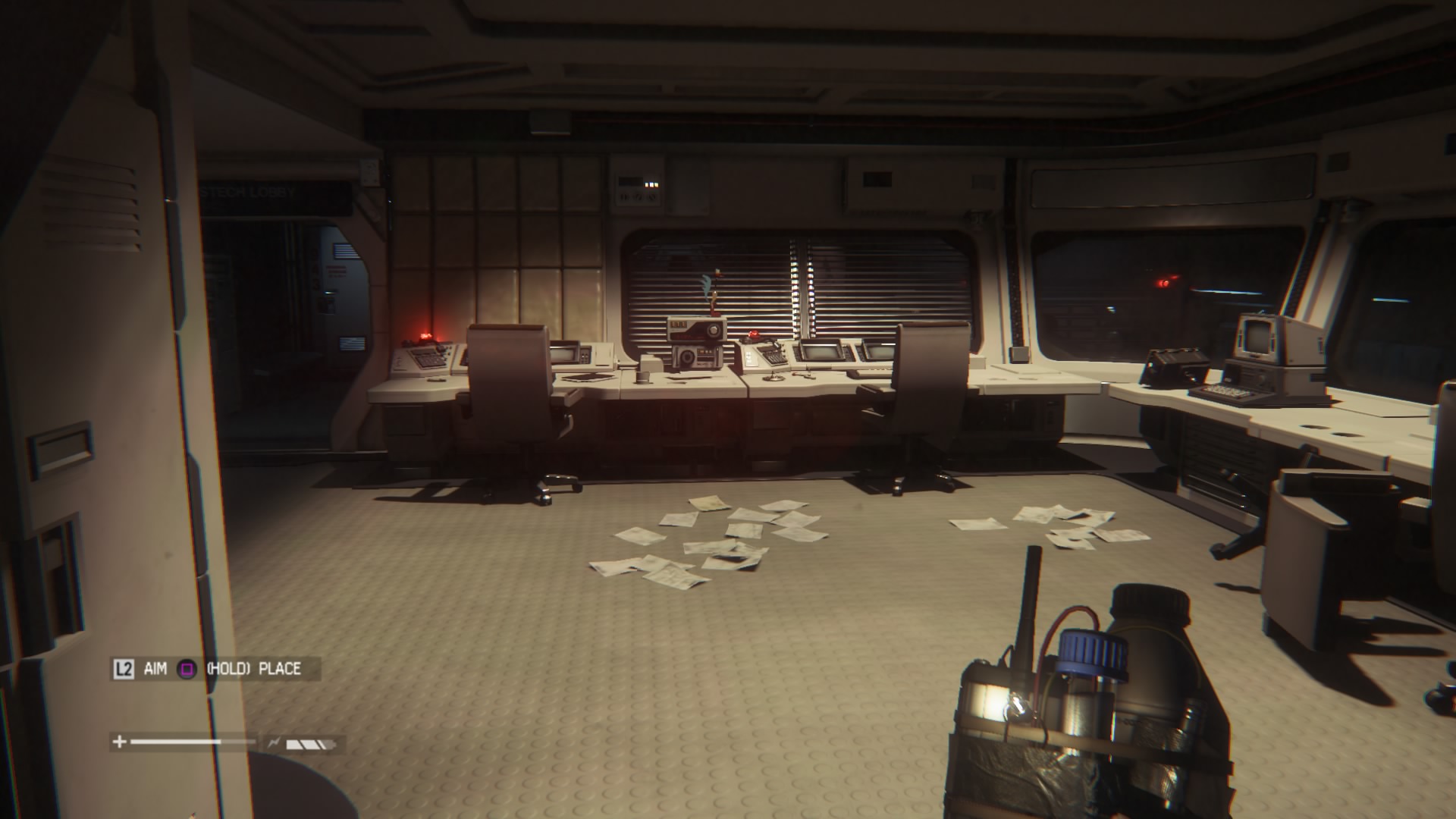
The game looks like something right out of the movie. Just about everything aboard Sevastopol is faithfully recreated, from the clunky, 70’s-inspired vision of future technology to the oddly invasive manual input, like huge levers and parts of the ship that have to be physically cut away to gain access to certain areas.

The concept of the game is an immediate winner for me: Set on a space station called Sevastopol, Alien: Isolation ditches the more action-oriented concepts behind the previous game in favor of the more subtle horror the first film had.

I was so excited to get into this game, but playing in a dark room with headphones was almost too much. Here was the creature from my nightmares, presented to me in an interactive format like never before. At times I found myself hiding just to catch my breath, afraid to move like when I first played Outlast. In some ways, Alien: Isolation almost feels like an Alien mod for that game.

And, as much as I loved the game at first, things quickly went south. By the fifth mission, I was getting tired of rushing from locker to locker, wasting most of the game just hiding. It seemed like as soon as I lost the alien, it was right on my tail again, and I could spend an hour just traversing a hallway.

Alien: Isolation
Not to mention dying again and again. And again.

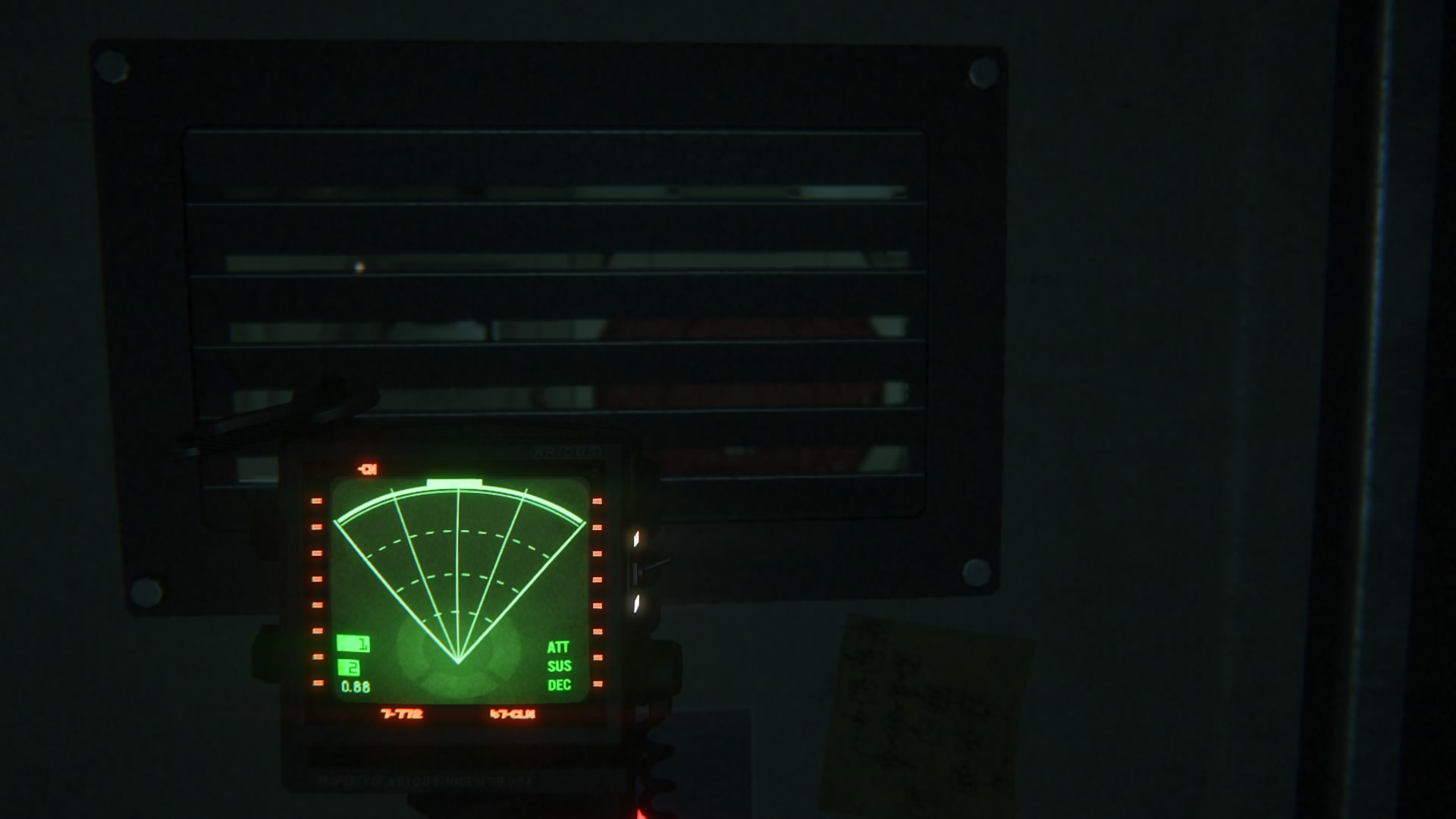
The game’s fifth mission almost sank the ship. Taking place in Sevastopol’s medical bay, which is a huge, multi-room area, it seemed absurd that the alien would follow me from chamber to chamber, hallway to hallway, supposedly unsure I was there but somehow miraculously always within a few yards of me. The motion tracker seemed like it was toying with me—at one point I watched the alien enter a room across from me, and I pulled it out only to see the thing tell me the alien was somewhere behind me. It was clear the game’s mechanics weren’t quite up to the task with its presentation. This culminated in nearly two hours of winding my way along this hall, only to have the alien come down from the vents overhead right as I was about to reach the door that led to the end of the mission. I quickly ducked under a table to wait for it to leave, and watched as the alien rounded a corner only to somehow spot me, despite absolutely no input on my part, and return from around the corner and kill me. And this was on easy mode!

At that point I swore I was done with the game, but I couldn’t keep myself away from it. It felt like I had come too far to just give up. It was personal now: That alien had to die. No way was it getting the best of me.

I went in with a new mindset. I decided the game was most likely not as logic-based as I was assuming, and it appears I was right. For example, the ambient noises aren’t always the alien, and even when they are, they aren’t often indicative of its position. A noise to the left doesn’t mean the alien is over there. The same was true for distant footsteps; as soon as the alien rounds a corner, there’s a good chance he’s not even there anymore. Assuming he’s prowling that same hallway is an exercise in futility, and a great invitation to spend the rest of Amanda Ripley’s life in a locker.

Alien: Isolation
Get used to this view.


I still died a time or two in the medical bay, but this new philosophy proved fruitful, and I made decent progress through the game. The cat-and-mouse bits still caused me anxiety, and sometimes were more annoying than they were frightening, but I was having fun again, and a lot of it.

The game changes pace once the player gets the flamethrower. No longer entirely defenseless, the alien still can’t be killed, but it can be scared off, so long as you see it before it sees you.

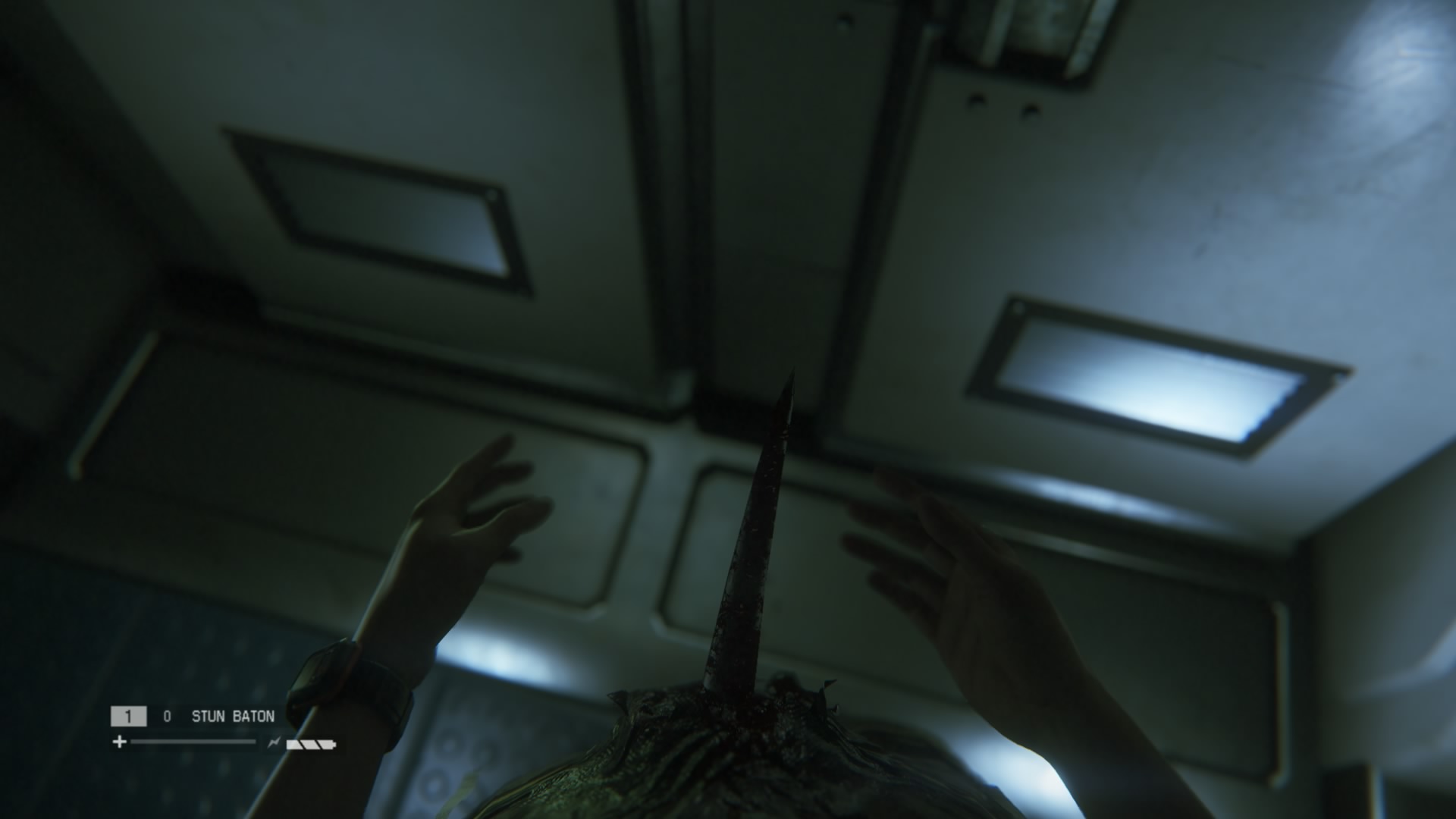
On the whole, this might be the most frightening video game I’ve ever played. I found myself dreading it, hoping each thing I had to do would be the last. There are very few ways for the alien to “get” you, only a few death animations, and while they’re very well done (and expertly touch on the franchise’s body horror elements) they also become repetitive. Still, I was constantly afraid of the alien, especially at times when my flamethrower ammunition was dwindling.

I had an odd determination to finish the game, akin to facing my fears. Alien: Isolation is well-crafted and gave me the perfect opportunity to do that. Xenomorphs have always been indestructible to me, especially in my nightmares, and I respect how much effort was put into this game to recreate that aspect of them.

Alien: Isolation
Oh dear.

Alien: Isolation has its flaws. Sometimes it seems like the writers had no idea where to take the story next, so they just borrowed scenarios straight from the films. I appreciate longer games, but this one has a very select few enemies and ways of dealing with them, so more diversity in mission objectives, enemies, or avoidance techniques would’ve done it justice. On the whole it was fun, terrifying, and gorgeous. Unfortunately, the ending seems like it looked great on paper, but passes by as a ten-second long cinema, and just looked weird and unfulfilling.

I don’t know if I’ll ever play this game again. I think once was enough. That weird ending did leave things wide open for a sequel, and I’m conflicted about that. I’d love to see this team expand on their ideas, but I’d prefer to see them do it with a new story instead of painfully dragging out the one they have. If nothing else, Alien: Isolation proves that there is a treasure trove of storytelling and scares to be had in this franchise, something that hasn’t been successfully tapped into in a very long time. In a lot of ways, this game is a true successor to the films, and is better than most of them. The last thing I want is for it to careen down the same path that brought us the likes of Aliens Vs. Predator: Requiem and Colonial Marines.

nowReading: Still Life With Woodpecker by Tom Robbins

Following is my review of Still Life With Woodpecker by Tom Robbins. You can read more of my book reviews on my Goodreads page.

Line after line is clever, funny, tragic, or some insane mixture of the three. I had no idea where the story would lead me next, but I’ve seldom been so excited to find out. It’s interesting how relevant the book is over thirty years after it was first published, yet so ahead of its time in other ways.

Still Life With Woodpecker transcends the boundaries of its pages in a fashion similar to House of Leaves, where the physical appearance of the book is itself a reflection of the themes found within. This, however, is more of a comedy (though both books boast a good deal of philosophy).

I was reminded of Wes Anderson’s movies and of Arrested Development; things seem ridiculous at first glance but are actually carefully-placed, often sparks lit to ignite later fires. The ones in Still Life With Woodpecker just happen to have dynamite at their ends.

The Ones Who Follow the Water Release

It feels strange posting a book release almost directly after posting said book’s announcement, but what can I say? My November has found me occupied with writing a new project, which I’m just about finished with the beginnings of.

My fantasy novel The Ones Who Follow the Water is available now, at the links below.

The Ones Who Follow the Water front cover

The town of Welby is surrounded by a high wall, erected in long-forgotten days when people remembered their magic and Immortals walked the earth.
Oren and Carah grew up together in Welby, but when Oren makes a mistake that could get Carah exiled, he has no choice but to climb over the wall and enter the unknown world beyond, following a river and looking for a necklace.
The world is full of creatures and people Oren never dreamed of, but friend and foe alike offer him the same advice: Don’t follow the water.
Oren’s journey leads him to an impossible castle, and inside, Oren finds the necklace, and a reason to never go back home.

Amazon • Apple iBooksGoogle Play • Barnes & Noble • Kobo •  Smashwords • Hardcover (Lulu)

Thanks for sticking with me, checking out my books, reading my reviews, and especially to those who leave reviews of your own.

For now, I’m going to get back to my NaNoWriMo project. After that… I have my eyes on the horizon, and I see some exciting things.

nowListening: Hope by Manchester Orchestra

Hey guys! I haven’t posted here in a while; I’ve been pretty busy with my NaNoWriMo project. I’m almost finished with that, and you can follow my progress here: http://nanowrimo.org/participants/crackedthesky/novels/novel-704342/stats

In the meantime, here’s a nowListening post I’ve been meaning to get to.

In this world of streaming music, digital downloads, physical copies becoming collector’s items, and bands touring nearly nonstop to compensate, it often feels like surprises are hard to come by. Still, now and then an artist finds a new way to shake things up, if even for a moment.

One of my favorite bands, Manchester Orchestra, did just that in September, when they suddenly and immediately released a new album called Hope.

Hope is a re-imagining of their previous album, Cope. Most of the songs are now quiet, stripped-down and acoustic, but Hope still has some curveballs to throw. Lyrically, some songs are word-for-word the same, and others have kept hardly anything intact. Musically, the songs are re-arranged, sometimes transposed to other instruments, shaken up and moved around, sometimes all but unrecognizable.

Manchester Orchestra Hope

The cover art is a stark contrast to the simple black-and-white, text-only cover of Cope. At the time I criticized it, but in retrospect, it makes sense paired alongside Hope, and serves as an immediate admission that the two albums are going to be very different.

The songs appear in the same order with the same titles as on Cope, starting off with “Top Notch”. This was one of the heavier songs on Cope, but its Hope counterpart is an acoustic, palm-muted rendition of the song that sets the tone for the album to follow. The chorus, a once-shouted “All that I know, there’s no way to fix it” is instead melodically droned out, giving it a haunting, lingering vibe that carries the song to its close.

“Choose You” offers the first major lyrical diversion from Cope. In my post about that album, I mentioned this song had one of my favorite opening lines, and much to my surprise, the same rings true for Hope, even with the lyrics changed:

Cope version:

The invention of the ship was the invention of the shipwreck
I tried to find out who I was by jumping off the deck

Hope version:

The intention of your trip was to intentionally wreck
I tried to talk you off the ledge but pushed you off the deck

—Manchester Orchestra, “Choose You”

Following this is “Girl Harbor”. The Hope version is a slow, acoustic version of the song, and a bridge that was one of my favorite moments on all of Cope serves the same purpose on Hope, but with an entirely different sound. On Hope, Andy Hull reminds us that he can sing, with the accompanying music suddenly dropping to a single guitar while he belts out line after line, his voice confident and controlled as it wavers between notes.

“Girl Harbor” by Manchester Orchestra.

“The Mansion” calms things down, remaining the sort of trippy, spaced-out rock song it was on Cope. Afterward is “The Ocean” which is almost unrecognizable; the lyrics haven’t changed, but the main guitar riffs are instead rendered on a piano while Andy Hull softly sings lines that were loud and explosive on Cope.

“Every Stone” echoes “The Ocean” with a keyboard replacing the main guitar, and continues the quieter tone Hope has carried for several tracks in a row. “All That I Really Wanted” shifts the focus back to the acoustic guitar and sticks with it through much of the song, while more layers of more instruments are added as the tune carries on, making it reminiscent of something from Andy Hull’s side project, Right Away Great Captain!

“Trees” is a darker song on both albums. There’s something creepy about it, but the Hope version dials this up all the way, even in the lyrics:

Pick from the bloodline tree,
It’s green with envy.
It’s okay to lose a limb
When they get too heavy.

—Manchester Orchestra, “Trees”

Following this is “Indentions”. Probably the fastest-paced song on Hope, its main riff sounds like a palm-muted rendition of one that appears only briefly at the end of the Cope version. I always loved the riff on Cope, and I’m glad to see it come back so prominently on Hope.

“See It Again” diverges the most from its Cope counterpart. On Cope, the song is driven by heavy drum beats and palm-muted guitars during the verses while it explodes for each chorus, reflecting the frustration the narrator appears to be experiencing in the song’s lyrics. On Hope, there are no guitars or drums; there are no instruments at all. The song’s lyrics are almost entirely different, sung along to a vocal chorus, making the song into a shiver-inducing church hymn.

The album, like the one before it, closes with a song called “Cope”. This version is set to two clean electric guitars, reverberating each note and giving it a grungy, echo-y tone.

All in all, Hope is a beast of a different flavor. It’s experimental in its sound, delivery, and creation; Andy Hull said in an interview that the band had wanted to do an alternate recording of their previous album, Simple Math, but never found the time. I wouldn’t mind seeing them repeat the idea for future records, or even going back and doing the same for previous ones.