I first mentioned this book in a post I wrote about good titles. To summarize the relevance: In the back of some magazine or another, I found a review for a book called The Girl Who Fell Beneath Fairyland and Led the Revels There. It’s not unusual for me to be captured by a good story, but just by the title? That was new to me. I learned this book was a sequel to a book with an equally captivating title: The Girl Who Circumnavigated Fairyland in a Ship of Her Own Making. The story could be about anything, it could take me anywhere. I had to pick it up.
I’m sure you’ve heard the saying “Don’t judge a book by its cover”, and I suppose the same should be said for its title, no matter how magical, captivating, awe-inspiring. Fortunately, from the first page, the story is as captivating as its title. Nearly every line is full of magic and wit, nearly every scene is crafted as a vehicle to propel the story forward. This is one of the most well-written books I’ve ever read.
It isn’t without its flaws. September, our twelve-year-old heroine, doesn’t sound like a twelve-year-old girl from World War II-era Nebraska. She sounds like a young woman from England, to be honest. Well-read or not, she seems much older than she actually is, except for her naivety. This is a small caveat, and one that is easily overlooked.
I was slightly disappointed by the near irrelevance of the title I fell head-over-heels for. After several chapters of pure magic and heart, it’s a little disappointing to find that the titular ship of her own making takes all of a paragraph to make, and isn’t really a ship at all. The circumnavigating also takes only a few pages, and compared to the events before and after it, comes across a little threadbare. However, this is also easily overlooked, as it almost seems like a joke played by the author; the same kind of trickery the inhabitants of Fairyland often pull on September.
I found the cast wonderful. September is likable without being overtly good, almost inhumanly flawless, as some heroes and heroines are. A-Through-L is a fantastic companion, and even meek Saturday, who is barely present, plays a large enough role to stand out. Some characters are also found where you wouldn’t expect them. Sometimes they’re inanimate objects, and not even magical ones. A certain green sweater plays a prominent role in the book, despite September’s inability to interact with it in any traditional way.
Perhaps my favorite character, though, is The Marquess. She’s this book’s Queen of Narnia, or Wonderland’s Queen of Hearts. The Marquess is, however, far more interesting. She’s frightening but oddly charming, and where Catherynne M. Valente could’ve given us a carbon-copy “pure evil” villain, she instead crafts a character who is human, tragic, and more deserving of this story.
At its heart, The Girl Who Circumnavigated Fairyland in a Ship of Her Own Making is a children’s story, and the kind we need more of. It’s important for children to grow up seeing the world not in black and white, but shades of gray; not as good and evil, but as different viewpoints. This isn’t to say that nobody is ever right or wrong, just that right and wrong sometimes take an adventure to come to. Valente treads a path set before her by the likes of Ursula Le Guin, Neil Gaiman, and Hayao Miyazaki, but still carves out her own place, her own reason for being in it. (While I’m here, I’ll mention that this book would make a fantastic Studio Ghibli film.)
I had so much fun reading this. Books like this are what made me want to write in the first place: A wonderful, magical story from the first page to the last, and beyond the back cover.
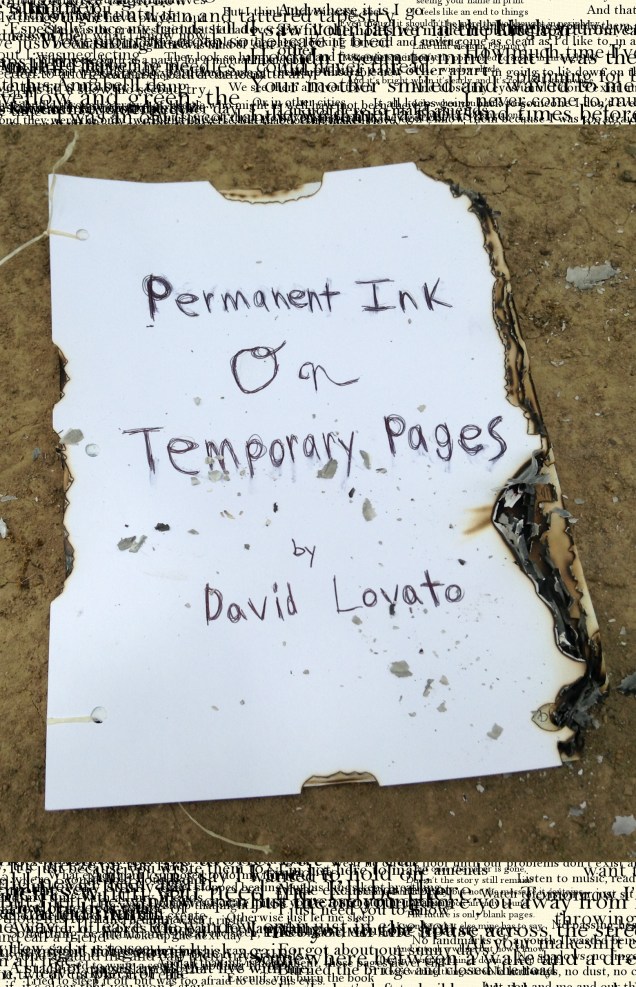
My poetry collection, Permanent Ink on Temporary Pages, will be released next month in ebook and paperback formats.
Each of the 16 poems in Permanent Ink on Temporary Pages stands alone, but also serves as a piece of a larger narrative. From the death of poetry itself in “At Rest in the Sea” to the lifetime-spanning “The Back of the Room”, the stream-of-consciousness piece “Alone” to the song-turned-poem “Sunday Calls for Cloudy Skies”, and the thematically-related interludes “Letters”, “Pages”, and “Poetries”, Permanent Ink on Temporary Pages tells the story of a narrator struggling to find his place in the world, drifting between tangential universes, and replacing the people around him with fictional characters, all the while writing letters he doesn’t send, poetry scattered to the wind, and pages full of everything he can’t bear the thought of losing.
My plan is to release all formats of the book on June 24th, 2014.
The ebook will be up for pre-order on most major retailers soon. In the meantime, here is the table of contents. A few of the poems available for reading now, which you’ll find through their links:
At Rest in the Sea
Letters
Faded.
Sunday Calls for Cloudy Skies
Alone Shadows and Fingerprints
The Back of the Room
Yearbook
Pages
Be There
In the House Across the Street On the Mend
I Could Have Shined
Love on a Page
Contronym
Poetries
All screenshots were taken by me from the Playstation 4 version of Outlast, and may contain graphic imagery.
I have a long history with the horror genre. Nearly all of the short stories I wrote as a teenager were horror stories. I loved horror films as well, and it’s no surprise that my fondness for the genre eventually extended to video games.
It started with Resident Evil, as it probably should have. I bought Resident Evil and Resident Evil Zero for the GameCube, in time to play through them before the then-impending release of Resident Evil 4 (which I still consider one of the greatest video games ever made). Eventually I’d move on to other genre classics like the Silent Hill series, Dead Space, Left 4 Dead, you name it.
I think the horror genre works particularly well in the world of video games. The added layer of interactivity video games provide gives you a sense of peril not possible in film or literature. It’s not impossible for a book to be frightening (I can easily refer you to House of Leaves by Mark Z. Danielewski and the short story “Vaster Than Empires and More Slow” by Ursula K. Le Guin) and you’re even more likely to find a frightening film, but video games have an innate ability to hit the fear sweet spot.
I grew up on survival horror video games, but the last few years have yielded a drought for the genre. Resident Evil is more about action now (and I liked Resident Evil 5 and I liked Resident Evil 6 even more, but the horror element is barely present). Silent Hill sees few releases these days, but the series has gone more or less the same way, and while Dead Space 3 tried to strike a balance between action and horror, it mostly abandons all attempts at fear after the first third of the game.
I must not be alone in my yearning for the survival horror classics of the past, because indie developers have stepped up to fill the void most major publishers seem to be ignoring. Games like Slender, Underhell, and Amnesia bring a lot to the table and prove survival horror is alive and well, but my favorite slice of this indie survival horror pie has to be Outlast.
The Blair Witch Project didn’t invent the found footage genre, but it did propel it into the mainstream. A few attempts have been made to translate it into video games, but Outlast does it the best. You play as Miles Upshur, a reporter who receives an anonymous tip about atrocities being committed at Mount Massive Asylum. Armed only with his video camera, Miles breaks into the asylum. The video camera plays an integral role in Outlast, being Miles’s only ally within the walls of Mount Massive.
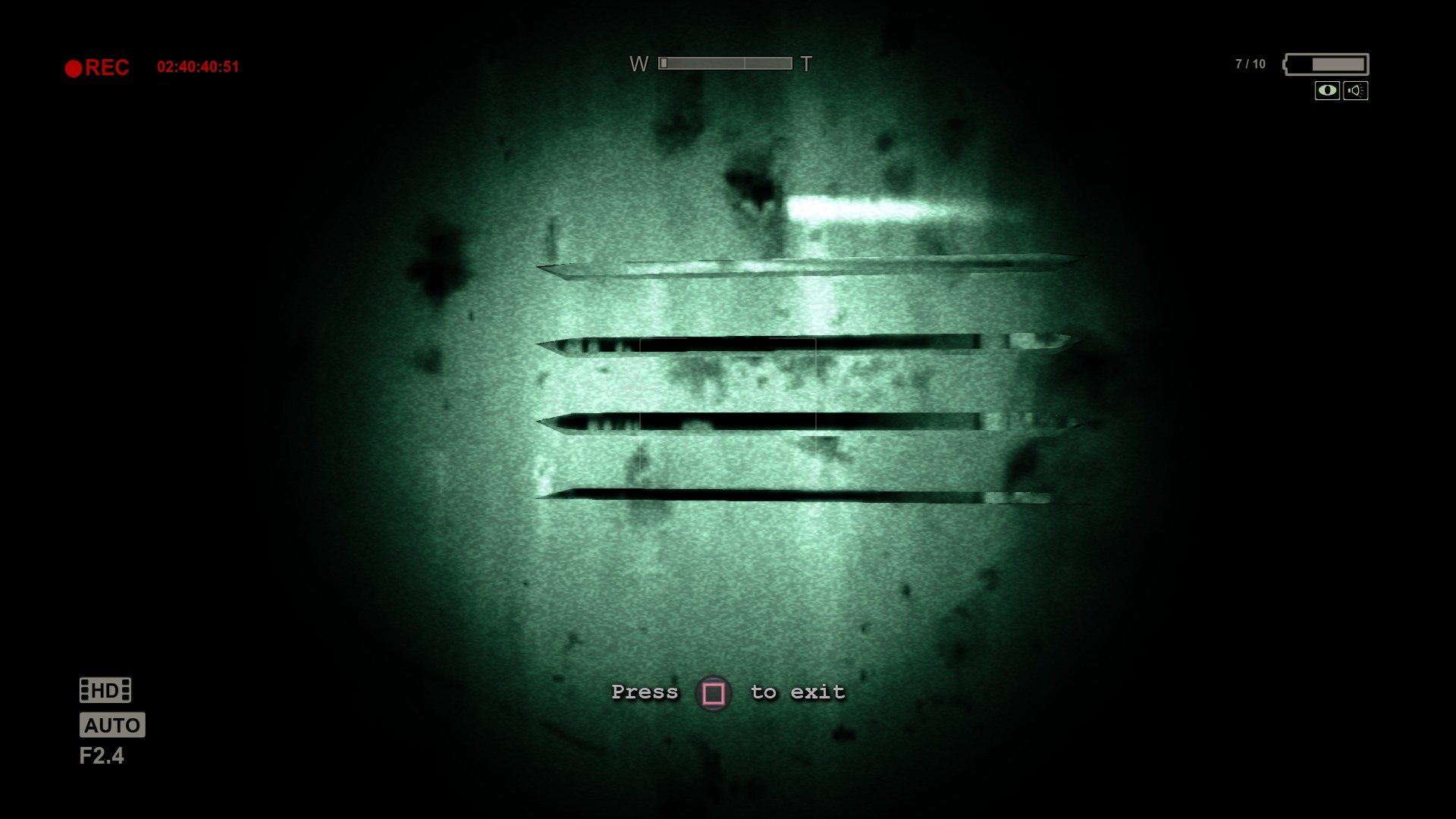
The anonymous tipster wasn’t joking, and Miles immediately becomes trapped in Mount Massive, wandering the dark and bloodied hallways, using the camera’s night vision mode to navigate dark corridors and sneak around pursuing enemies. Night vision isn’t unlimited, and Miles must keep a stock of batteries to power it as he tries to record the events unfolding in the asylum, or just find a way out.
A few survival horror games put you in the role of a defenseless protagonist, relying on stealth and running away rather than confronting enemies head-on. Outlast is interesting in that not everyone in the asylum is trying to kill you–some of the inmates will actually aid you, some will ignore you, and some will aid, ignore, or attack you depending on their mood.
Outlast features no playable combat, forcing you to rely on stealth and hiding to avoid enemies.
There are no ghosts or monsters in Mount Massive, only mentally disturbed people. While some have an inherent propensity for violence, others only mistake Miles for another “doctor” arriving to further torment them. This human aspect permeates the game, and even extends to Outlast’s primary antagonist, Chris Walker.
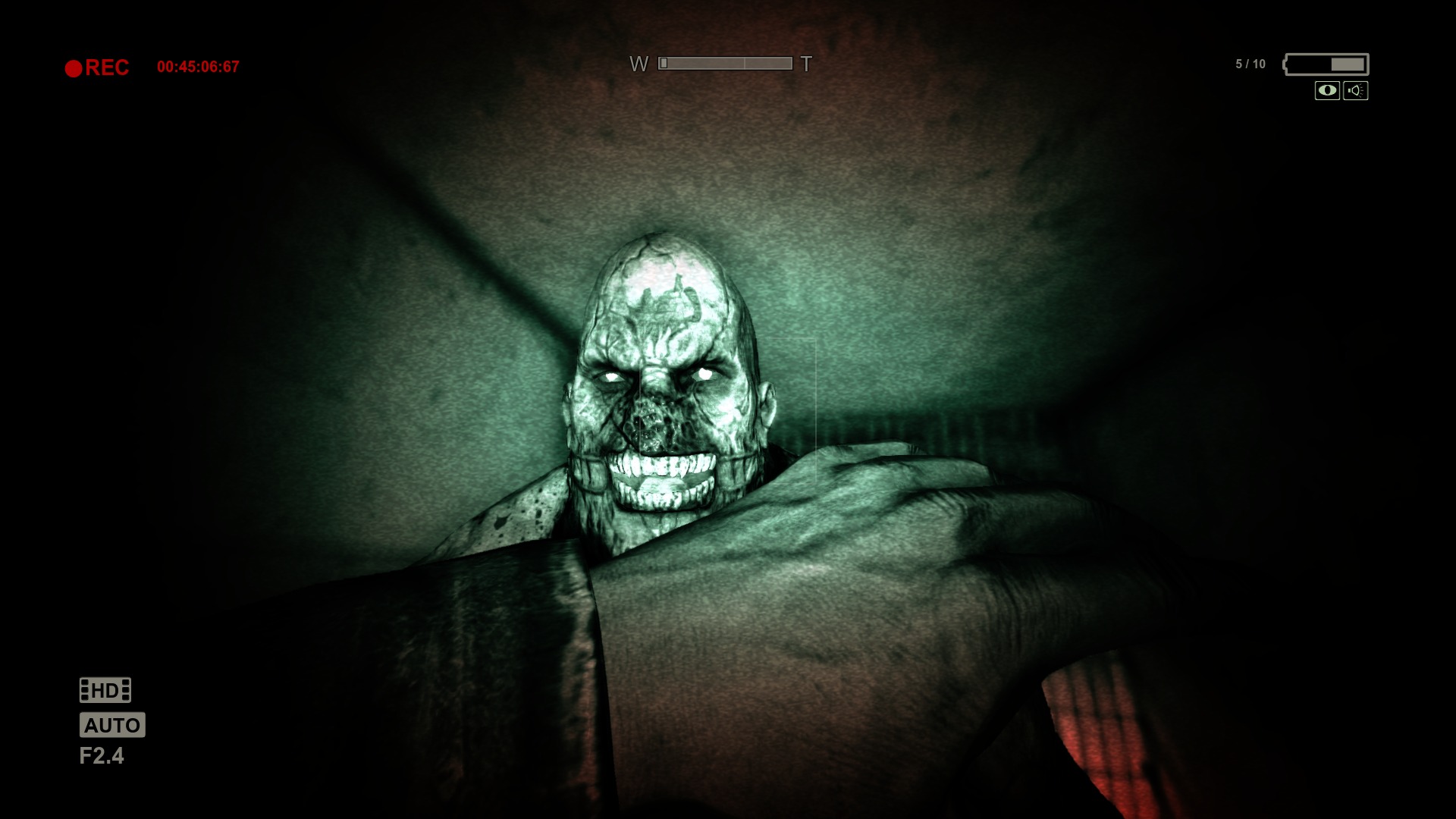
Walker is an ex-marine committed to the asylum long before Miles’s arrival. Easily the largest inmate, Chris stalks the halls grunting about completing his mission, rattling his chains, breaking down doors, and occasionally ripping off people’s heads. He has a particular interest in Miles Upshur, and if he catches you with low enough health, it’s an immediate game over.
Protagonist Miles Upshur tries in vain to defend himself against Chris Walker.
Other characters (like Father Martin, Doctor Trager, and the twins) give the game a sense of personality. They’re well-written, oddly charming, and create lingering presences that keep you on your toes throughout your stay at Mount Massive.
The story behind the events at the asylum unfold through documents and in-game dialogue and graffiti, all pointing Miles toward one thing: The Walrider. I won’t spoil what the Walrider is, other than it’s the one inhuman thing in Mount Massive, and Miles will eventually come face-to-face with it.
A lot of the game’s events are scripted, and the layout and level design are genius. While you’re rarely not in control of the protagonist, the building is designed to make sure you’re looking at the right places at the right times to see exactly what you need to to progress the story, or just to frighten you.
Outlast had me on the edge of my seat, but the game’s ending left a lot to be desired. My largest gripe with the horror genre is the way many works end. Often they’re predictable, ambiguously grim, and usually avoidable scenarios that feel more like the writing team checked out early than actually sat down to wrap up the story they created. Outlast was no exception to this rule. At least, not until Whistleblower.
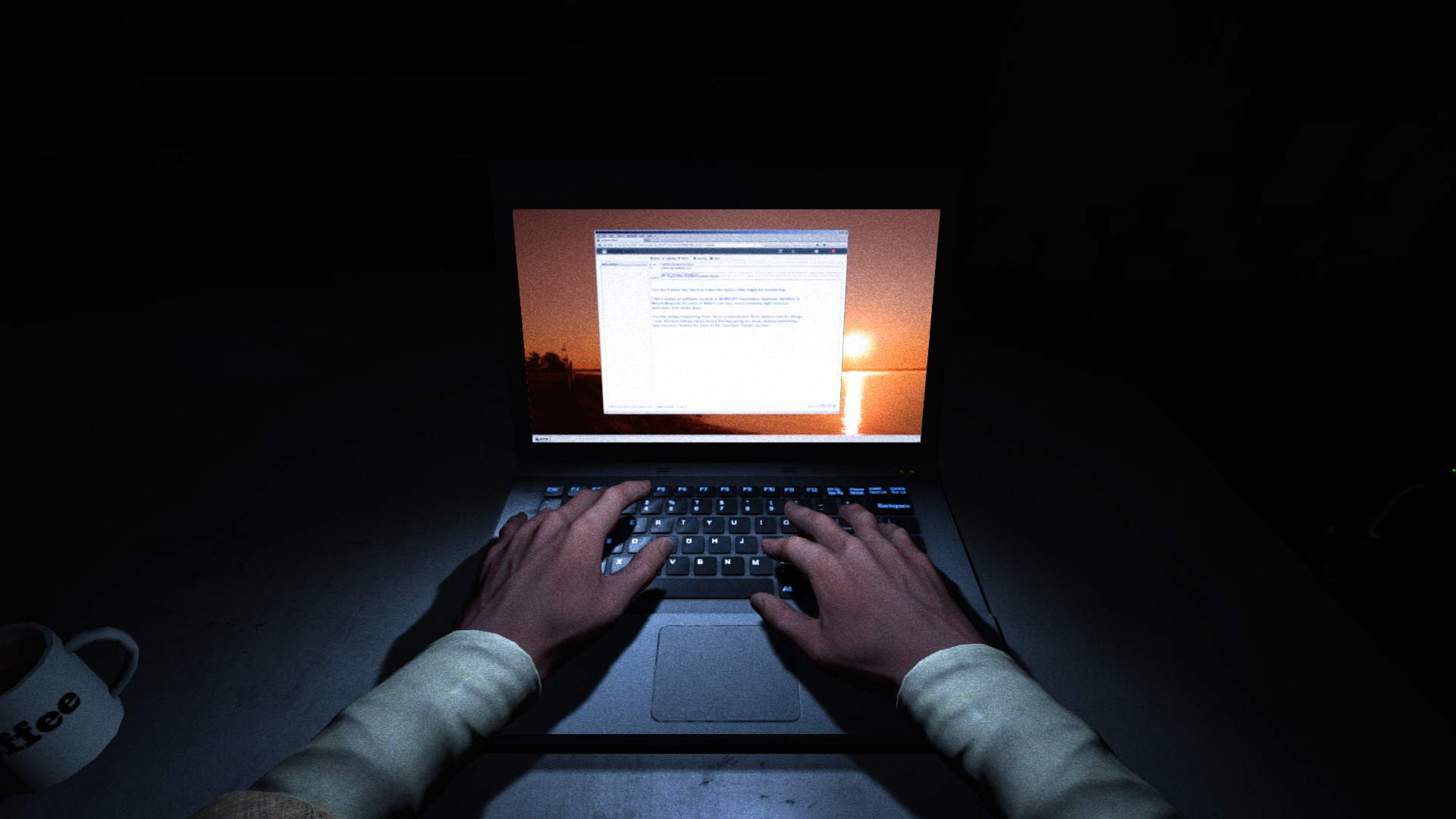
Outlast: Whistleblower is a DLC prequel/interquel/sequel to the main game. In it you play as Waylon Park, the anonymous tipster who first alerted Miles Upshur to the events at Mount Massive. The two stories heavily intertwine, which is apparent from the beginning: Your first objective as Waylon Park is to send the email Miles Upshur receives in the main game.
While it starts earlier than Outlast, Whistleblower is meant to be played after. As Waylon Park, you’ll experience echoes of Miles Upshur’s actions throughout the game, which leads to several Easter eggs and clever encounters with old enemies and allies.
Waylon Park prepares to send an email that will change his life—and Miles Upshur’s—forever.
Whistleblower doesn’t rely entirely on the old, however. The DLC introduces new characters equally as creative and frightening as the ones found in Outlast. Dennis, Frank Manera, and Eddie Gluskin almost make you wish you were being hunted by the twins or Doctor Trager again.
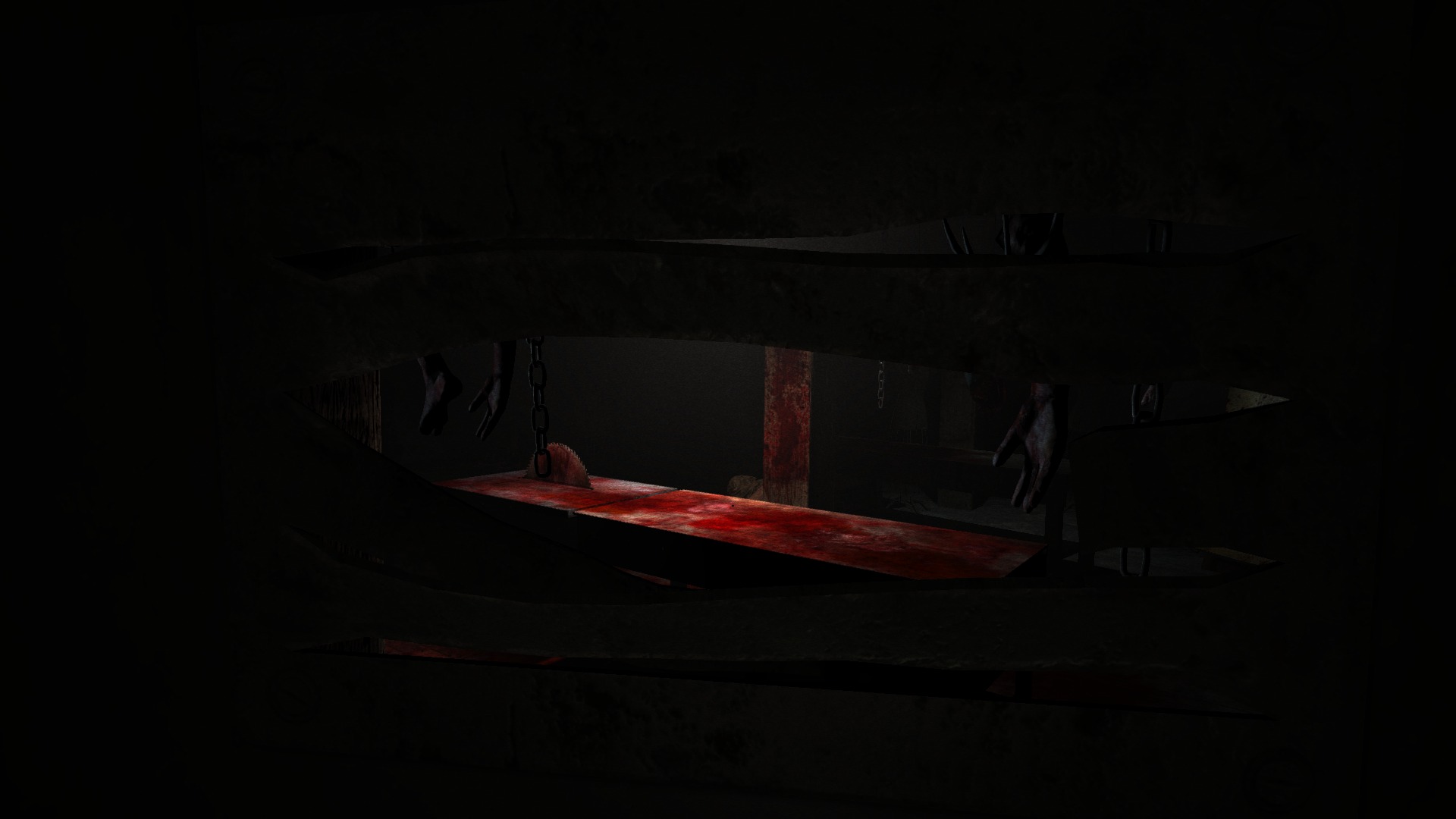
Outlast and Whisteblower touch on the “body horror” subgenre made popular by works such as Alien, The Thing, and Dead Space. As far as subgenres go, body horror is one of my favorites. When you can all but feel what’s happening on the screen, the horror becomes more visceral, more effective. Again, I don’t want to ruin the fun, but neither Miles Upshur nor Waylon Park will emerge from their time at Mount Massive entirely intact.
Inmate Eddie Gluskin’s operating table.
Whistleblower is a much shorter experience than Outlast (my first playthrough of the main game took almost seven hours, while Whistleblower hovered around two) but it remedies all of my qualms with the game’s ending.
Both Outlast and Whistleblower come with a layer of social commentary (the former on mental health and treatment of those suffering from disorders, the latter on the titular concept of whistleblowing) but it never gets in the way of the game’s main intention: Telling a story. A very disturbing, frightening, and totally fun story.
The team at Red Barrels consists mostly of former employees of Ubisoft and Naughty Dog, and proves that a game doesn’t need a huge budget or a large studio to be as good as the $60 discs you’ll find on store shelves. Outlast is a lot of fun and one of the best survival horror experiences I’m aware of. I’m excited to see what else the studio has to offer, not to mention any future entries they might have in the Outlast vein.
The halls of Mount Massive are difficult to escape, but I can’t help but hope Red Barrels will one day let us back in.
I recently received my proof copies of the hardcover editions of After the Bite and In the Lone and Level Sands. I’m pretty happy with the way they turned out, and now I’m making them available to purchase through Lulu.
I wish I could make these available elsewhere, but I can’t justify the cost to do so. For now, Lulu is the only place to get hardcovers of these books. Paperbacks and ebooks will remain available everywhere they currently are.
After the Bite comes in black satin with gold spine text, while In the Lone and Level Sands comes in tan satin with black spine text. Both books feature glossy dust jackets and black-and-white interiors.
I’ve been going over my poetry collection, and on the whole I’m happy with it. It’s looking very unlikely that I’ll scrap it at this point, so I’m probably going to share a few more poems in the coming weeks. I still want to give it another round of editing, then there’s assembling it for publishing, finding a cover, hopefully getting some external feedback, etc. Hopefully I’ll have more concrete information about it next time I mention it on here.
In the meantime, this poem is called “On the Mend” and it almost didn’t make the cut. It’s one of the shortest poems in the collection, but it fits the theme well, and I’m happy with how it turned out.
On the Mend
I’ve been throwing bricks
From atop this house of sticks
And I’ve been casting stones
Across a lake as dry as bones
I hope you never know
How much time I’ve spent planning for bridges
I never come to, much less have to cross
And I’ve been planting seeds
In a yard not fit for weeds
I’ve been writing words
That leave the page like little birds
I was pretty sure
I’ve spent most of my life burning bridges
I couldn’t sleep beneath, much less try to cross
I wrote you down so you would always stay
But a heart like yours won’t be contained
So I put quotation marks around your name, like wings
So you could fly away from me
I hope you never see
I’ve spent every hour since then building a bridge
And I can barely walk, much less bear a cross
Tonight I’ll try to sleep
Beside the secrets I don’t want to keep
Tomorrow I’ll start throwing bricks
At your makeshift crucifix
And hope you do believe
You won’t find any answers jumping off of bridges
Come down from there. You’ve suffered enough.
I’ve already posted this on my facebook page, but I’ve cleaned it up since then, and I’m really hoping to get some input from blog followers as well as strangers.
I’m just about finished with the first draft of my poetry book, which I’m calling Permanent Ink on Temporary Pages. The whole thing has been a new experience for me, one I’ll detail in a later post, but for now I can summarize: I’m somewhat new to the world of poetry. Not writing it, but sharing it.
Over the course of a few weeks, I had a burst in creativity, during which I wrote a few poems. I noticed recurring themes throughout them, so I decided to keep them together. With a sort of narrative in mind, I wrote a few more, and even dusted off some old ones that fit the theme, which has led me to a collection of roughly 16 poems. At first that strikes me as too few, but then again, most of them are longer than the poems I’m used to reading.
I’m going to let the collection sit for a while before I come back to it and edit it, but I want to get outside input on some of it as well, especially if this is going to be an actual book I put together and decide to sell. (Not sure if I can justify the cost of a physical edition of this one, so I might go ebook-only, but again, that’s all for down the road.)
So here’s one of my poems. It’s called “Shadows and Fingerprints”. I’d be very grateful to hear any thoughts on it, good or bad.
Shadows and Fingerprints
There are fingerprints in the dust on the underside of the cabinet
And fingerprints in the thoughts on the underside of my mind
There are shadows on the ceiling
Out in the hallway where I sat on the stairs
And shadows in my memories
Cast by someone who isn’t there
I’ve never been as awake as I am right now
I want someone to talk to, but everyone’s asleep
And that’s okay.
I shouldn’t want to trouble them anyway
I never come as clean as I’d like to, in any case
I’m going to lie down on the floor
And close my eyes until I don’t exist anymore.
It all keeps going back to someone I don’t even know
Or the fact that I don’t know them because I was too afraid to live
So I walk through this city
Trying to find myself out there
Find only passing headlights
And landmarks of my youth,
Like where we’d sit where the sidewalk ends
Walk up the hill and around the bend
Cut through the woods to the circle of stones where we’d sit
Contemplating the world around us and our places in it
It’s not quite the same as it used to be.
Without Ian, it feels a little bit empty.
We’ll get away for a while
Let’s go to Michael’s house, visit Loren in Ohio
Sip vodka and turn off the tv screen
Talk about life and death and philosophy
Get everyone together and go down to the lake
The sun goes down, the stars come out, but we’re wide awake
Let’s sit around a campfire,
Bring a bag of things to burn
Like journal entries
Written by someone who isn’t me
(not anymore)
Old letters
Torn photographs
Clothes that don’t fit,
And some that never really did
That cherub figurine
Unfinished poetry
And all my thoughts of her and me,
So maybe I could get some sleep
Get in the water
Float on your back
Let the wind in the waves wash away your every heart attack
Pitch up the tent
Get into bed
Stay up talking ‘til the morning brings the sun up again
Then go back home
Get on with our lives
Maybe never see each other again,
But that’s all right.
I’ll walk these city streets,
Try to find someone out there who feels like me
We’ll lie on the floor until our problems don’t exist anymore
We’ll listen to music, read poetry
Watch television or just sit quietly
No passing headlights
No landmarks of a youth I wasted being alone
No shadows, no fingerprints
No hallways, no dust, no cabinets
Just you and me and our thoughts.
Just you and me,
Or me and my thoughts.
It’s always me and my thoughts.
When we die, do we turn into stardust?
Can it wait until I’ve made something beautiful first?
Because so far I’ve made nothing but shadows.
So far I’ve left nothing but fingerprints.

 Faded Pages